Vercel vs Netlify - Which Should You Choose
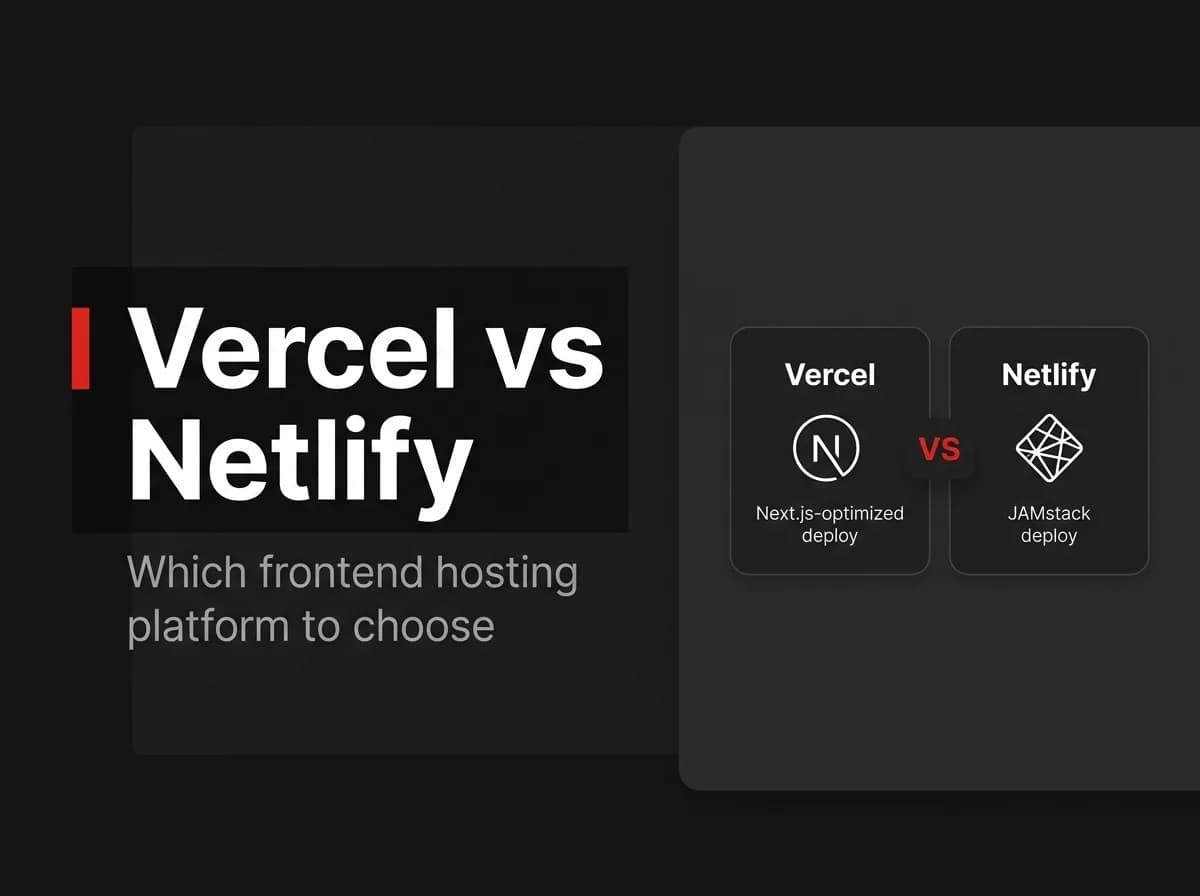
Vercel vs Netlify is a real debate only if you know what both platforms actually are — frontend hosts with serverless functions, not full backend platforms. Both deploy frontends beautifully from Git. Where they differ is framework alignment, pricing model, and ecosystem. And where they both fall short is the backend: a real SaaS needs more than either can provide on its own. Here's the honest breakdown.
Quick Answer
Choose Vercel if you build with Next.js and want the tightest framework integration and edge features. Choose Netlify if you want a flexible, framework-agnostic host with generous build tooling. Both deploy frontends well — but remember a full SaaS also needs somewhere to run its API, background worker, database, and Redis, which neither replaces.
What they are
Vercel and Netlify are platforms that build and host frontend (and serverless) apps from your Git repo. They handle builds, CDN, and serverless functions. For the container-based alternative, see how to Dockerize a Next.js app.
At a glance
Dimension | Vercel | Netlify |
|---|---|---|
Framework fit | Next.js-first (made by its creators) | Framework-agnostic |
Functions | Serverless + edge | Functions + edge |
Build tooling | Streamlined for Next.js | Flexible, plugin ecosystem |
Pricing | Usage + per-seat | Usage + per-seat |
Best for | Next.js apps | Mixed/static + JAMstack |
Backend (API/worker/DB) | Not a full backend host | Not a full backend host |
(Pricing and limits change — verify current details on each vendor's site.)
Pricing
Both have free tiers and scale on usage (bandwidth, build minutes, function invocations) plus seats. Watch bandwidth and function usage — those are where bills grow. Model costs at your real traffic.
Developer experience and framework support
Vercel is built by the Next.js team, so new Next.js features tend to land there first with minimal config. Netlify is framework-agnostic and shines when you mix frameworks or static sites and want its plugin ecosystem.
Functions and edge
Both offer serverless functions and edge runtimes for low-latency logic. For heavy or long-running work, neither is a substitute for a persistent backend.
Which to choose?
Choose Vercel if: your app is Next.js and you want the smoothest path and edge features.
Choose Netlify if: you want framework flexibility and its build/plugin tooling.
Do not forget the backend
This is the gap most comparisons skip: a real SaaS is more than a frontend. It needs an always-on API, a background worker (queues, schedulers), a database, and often Redis. Vercel and Netlify host the frontend and serverless functions, not a full backend. FastStaq's client deploys to Vercel (or any Node host), while its API, worker, PostgreSQL, and Redis deploy separately — FastStaq even ships Railway, Render, and Fly configs for exactly that. See Railway vs Render.
Frequently asked questions
Is Vercel better than Netlify? For Next.js, usually yes; Netlify is stronger for framework-agnostic and mixed setups.
Can I host my whole SaaS on Vercel? The frontend and light functions, yes; a full backend with workers and a database needs a separate host.
Are they free? Both have free tiers; costs scale with bandwidth, builds, and functions.
Next steps
Comparing SaaS boilerplates?
Get the SaaS Production Readiness Checklist, the 20 things any boilerplate has to get right before launch, plus a 6-part walkthrough of each one. One email to start, unsubscribe anytime.