Railway vs Render - Which PaaS for Your SaaS
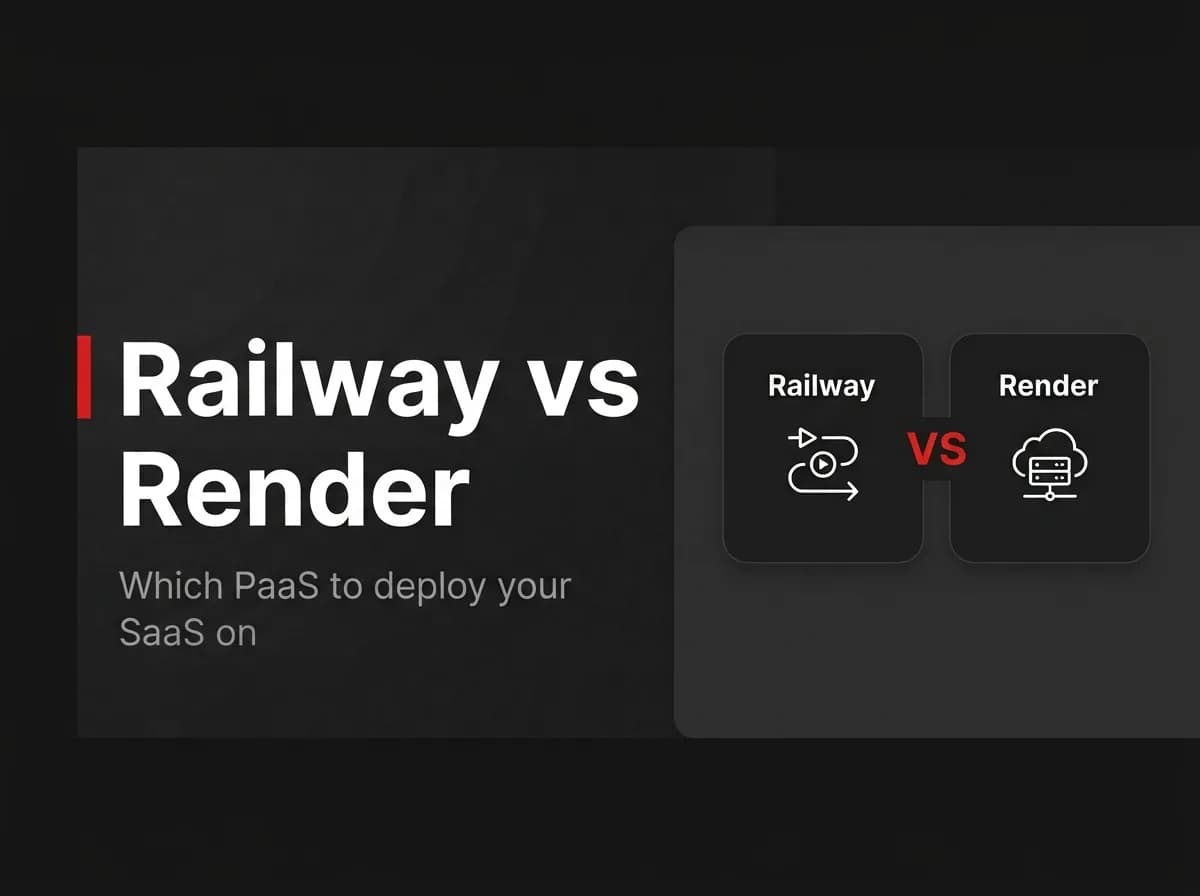
Railway vs Render comes down to one core difference: pricing model. Railway meters resource usage — great for spiky or early-stage workloads. Render uses predictable per-service plans — easier to forecast as you scale. Both can host a full SaaS: frontend, API, background worker, database, and Redis. Here's which one to pick.
Quick Answer
Choose Railway for usage-based pricing and a fast, polished developer experience when you want to move quickly. Choose Render for predictable per-service pricing and mature managed PostgreSQL/Redis when you want stable, planned costs. Both can host a full SaaS — frontend, API, background worker, database, and Redis — on one platform.
What they are
Railway and Render are platform-as-a-service (PaaS) hosts that run your app, database, and background jobs from your Git repo. Unlike frontend hosts, they are built to run a full backend — which is why they fit a real SaaS. For the frontend-host comparison, see Vercel vs Netlify.
At a glance
Dimension | Railway | Render |
|---|---|---|
Pricing model | Usage-based (resource metered) | Per-service plans |
Managed Postgres | Yes | Yes (mature) |
Managed Redis | Yes | Yes |
Background workers | Yes | Yes |
Developer experience | Fast, polished, quick setup | Predictable, config-driven |
Cost predictability | Variable with usage | More predictable |
Best for | Move fast, variable load | Stable, planned costs |
(Pricing and features change — verify current details on each vendor's site.)
Pricing model
This is the main difference. Railway meters resource usage, which is efficient for spiky or early workloads but harder to predict. Render uses per-service plans, which makes monthly costs easier to forecast as you scale.
Databases and Redis
Both offer managed PostgreSQL and Redis, so you can run a full SaaS stack without a separate database vendor. Render's managed Postgres is often praised for maturity; Railway's is quick to provision.
Background workers
A real SaaS usually needs a background worker for queues and scheduled jobs. Both platforms run worker services alongside your web service — important, because this is exactly what frontend hosts cannot do.
Developer experience and config
Railway is known for a fast, polished setup flow. Render is config-driven and predictable. Both deploy from Git with minimal friction.
Which to choose?
Choose Railway if: you want usage-based pricing and the fastest path for a new or variable-load project.
Choose Render if: you want predictable per-service costs and mature managed data services.
How FastStaq fits
FastStaq ships ready-to-use `railway.toml` and `render.yaml` config files, so it deploys to either platform out of the box. Because a full FastStaq deployment needs an API, a background worker, PostgreSQL, and Redis, these PaaS hosts (which run all of that) are a natural fit — and the included configs mean you are not writing them from scratch. See also Vercel vs Railway.
Frequently asked questions
Is Railway cheaper than Render? It depends on load — Railway's usage-based model can be cheaper for small/spiky apps; Render's per-service pricing is more predictable at scale.
Can I run a full SaaS on either? Yes — both run frontend, API, worker, Postgres, and Redis.
Does FastStaq support both? Yes — it ships both railway.toml and render.yaml.
Next steps
Comparing SaaS boilerplates?
Get the SaaS Production Readiness Checklist, the 20 things any boilerplate has to get right before launch, plus a 6-part walkthrough of each one. One email to start, unsubscribe anytime.