How to Deploy a Next.js App to Vercel
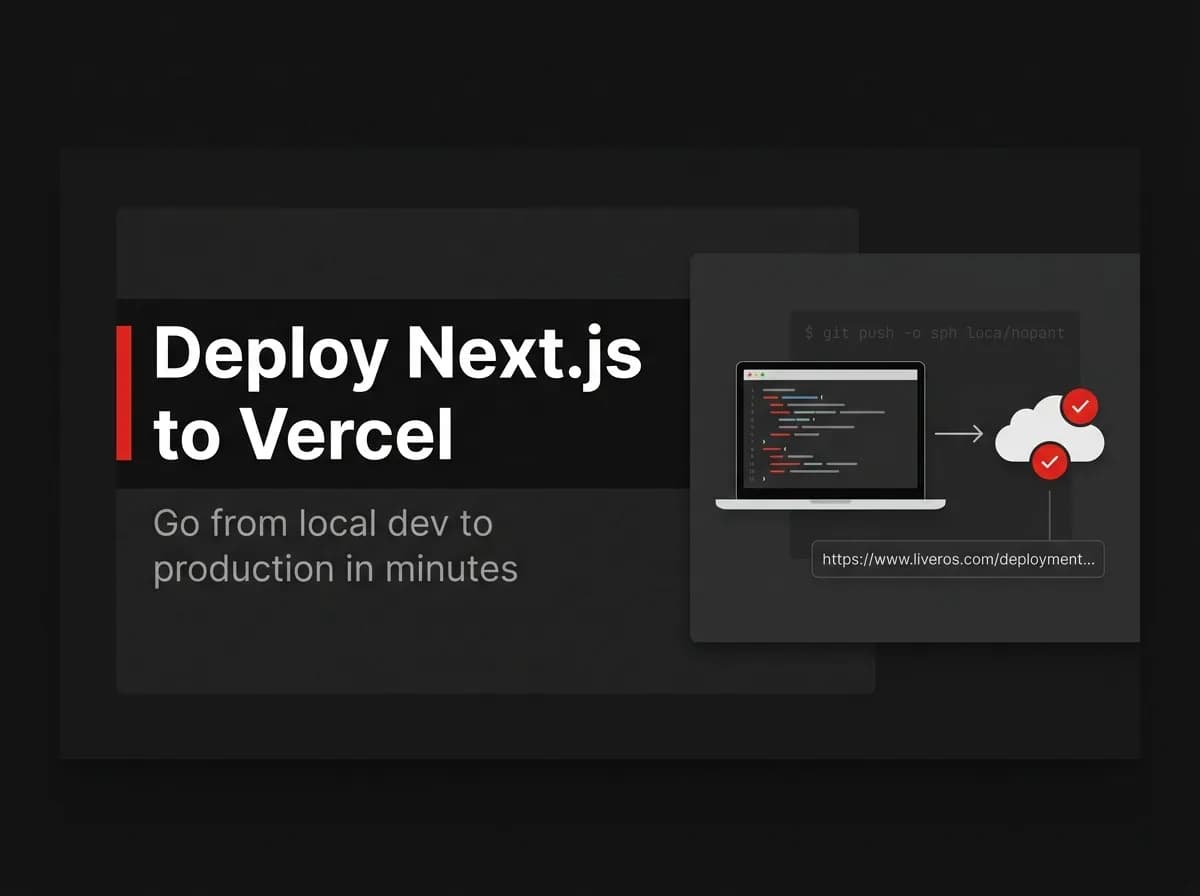
Deploying a Next.js app to Vercel takes about five minutes for the front end. The part most guides skip: your database and backend API don't live on Vercel — they connect through environment variables from wherever they actually run. Here's how it all works, including the architectural reality behind the "one-click deploy" narrative.
Quick Answer
To deploy a Next.js app to Vercel, connect your Git repository to Vercel, add your environment variables, and Vercel builds and deploys automatically on every push. Add a custom domain in the dashboard. Vercel hosts the Next.js front end; a separate backend and database (such as PostgreSQL) live elsewhere and connect through environment variables.
Connect your repository
Sign in to Vercel, import your Git repository, and Vercel detects Next.js automatically. Each push to your main branch becomes a production deploy; pull requests get preview deploys.
Set environment variables
Add your secrets and config (API URLs, keys, DATABASE_URL) in the project settings. Vercel injects them at build and runtime. Never commit secrets to the repo.
Build and deploy
Vercel runs your build command and deploys the output. You get a URL immediately, and every subsequent push redeploys.
Add a custom domain
In the dashboard, add your domain and point its DNS at Vercel. TLS certificates are issued automatically.
Where the backend and database go
Piece | Where it runs |
|---|---|
Next.js front end | Vercel |
Separate API/backend server | Your own host or another platform |
Database (Postgres) | Managed Postgres or your server, via |
For a full-stack app, Vercel hosts the front end while your API and database run elsewhere and connect over the network.
How this maps to FastStaq
FastStaq is a Dockerized client + server monorepo. You can deploy its Next.js client to Vercel, while its Express server and PostgreSQL database run elsewhere (your own host or a managed Postgres), connected via environment variables. So Vercel is one valid option for the front end — not a one-click deploy of the entire stack. If you'd rather run everything yourself, see how to self-host Next.js and Vercel alternatives.
Frequently asked questions
Does Vercel host my database? No — host Postgres on a managed provider or your own server and connect via DATABASE_URL.
Are deploys automatic? Yes — every push deploys, with preview deploys for pull requests.
Can I deploy a full-stack app entirely on Vercel? Vercel hosts the front end and serverless functions; a long-running backend server typically runs elsewhere.
Next steps
Compare Vercel alternatives
Learn how to self-host Next.js
Back to the Next.js Docker deployment guide