SaaS Pricing Models Explained (with Examples)
SaaS pricing models are not just academic categories — they determine how your revenue grows as your customers get more value from the product. Pick the wrong model and you either leave money on the table or scare away the wrong segment entirely. Here's a plain-English breakdown of every major SaaS pricing model, with examples and a clear guide on when to use each.
Quick Answer
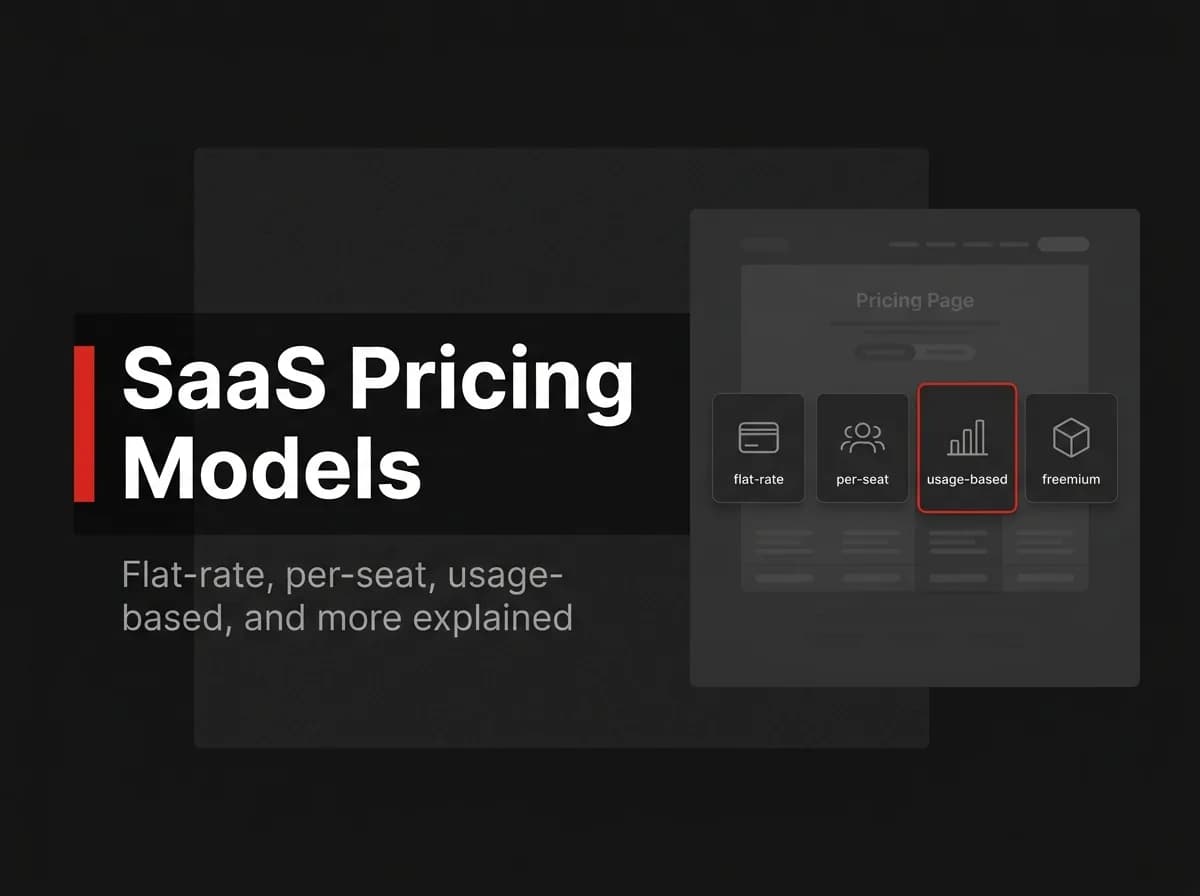
The main SaaS pricing models are flat-rate, tiered, per-seat (per-user), usage-based, and freemium — plus hybrids that combine them. Flat-rate is simplest; tiered and per-seat are the most common for B2B; usage-based aligns price with consumption; freemium drives top-of-funnel growth. Most successful SaaS products combine a tiered base with a per-seat or usage component.
The models at a glance
Model | How you charge | Best for | Example |
|---|---|---|---|
Flat-rate | One price for everything | Simple products, early stage | One $29/mo plan |
Tiered | A few plans with growing features/limits | Most B2B SaaS | Starter / Pro / Business |
Per-seat | Price x number of users | Team collaboration tools | $12 per user/mo |
Usage-based | Price x consumption | APIs, infra, metered value | $0.01 per request |
Freemium | Free core, paid upgrades | Wide top-of-funnel | Free + Pro |
When to use each
Flat-rate: you want zero friction and a single value prop.
Tiered: different segments need different feature sets — the default for B2B.
Per-seat: value scales with the number of people using it.
Usage-based: value scales with how much they consume; pairs well with a base fee.
Freemium: free users can reach value and convert, and free support cost is low.
Hybrids win
Real pricing is usually a blend: a tiered base (Starter/Pro/Business) with per-seat or usage add-ons. This captures both small and large customers and grows revenue as accounts expand.
How this maps to FastStaq
FastStaq supports these models technically: Plan + Subscription + BillingInterval cover flat-rate and tiered monthly/yearly plans, and the credits module (CreditBalance, CreditTransaction, creditService.addCredits) supports usage-based metering when you turn it on. Per-seat is a matter of how you map seats to a plan. Because the gateway is Stripe or Lemon Squeezy, you can run any of these without rebuilding billing. See SaaS pricing strategy and the billing guide.
Frequently asked questions
Which pricing model is most common? Tiered pricing, often with a per-seat or usage-based component, is the most common in B2B SaaS.
Is usage-based pricing better? It aligns cost with value and can grow revenue, but it makes bills less predictable — many teams pair it with a base fee.
Can I combine models? Yes — most mature SaaS products combine a tiered base with per-seat or usage add-ons.
Next steps
Read the SaaS pricing strategy guide
Back to the SaaS billing guide