SaaS Pricing - A Complete Strategy Guide
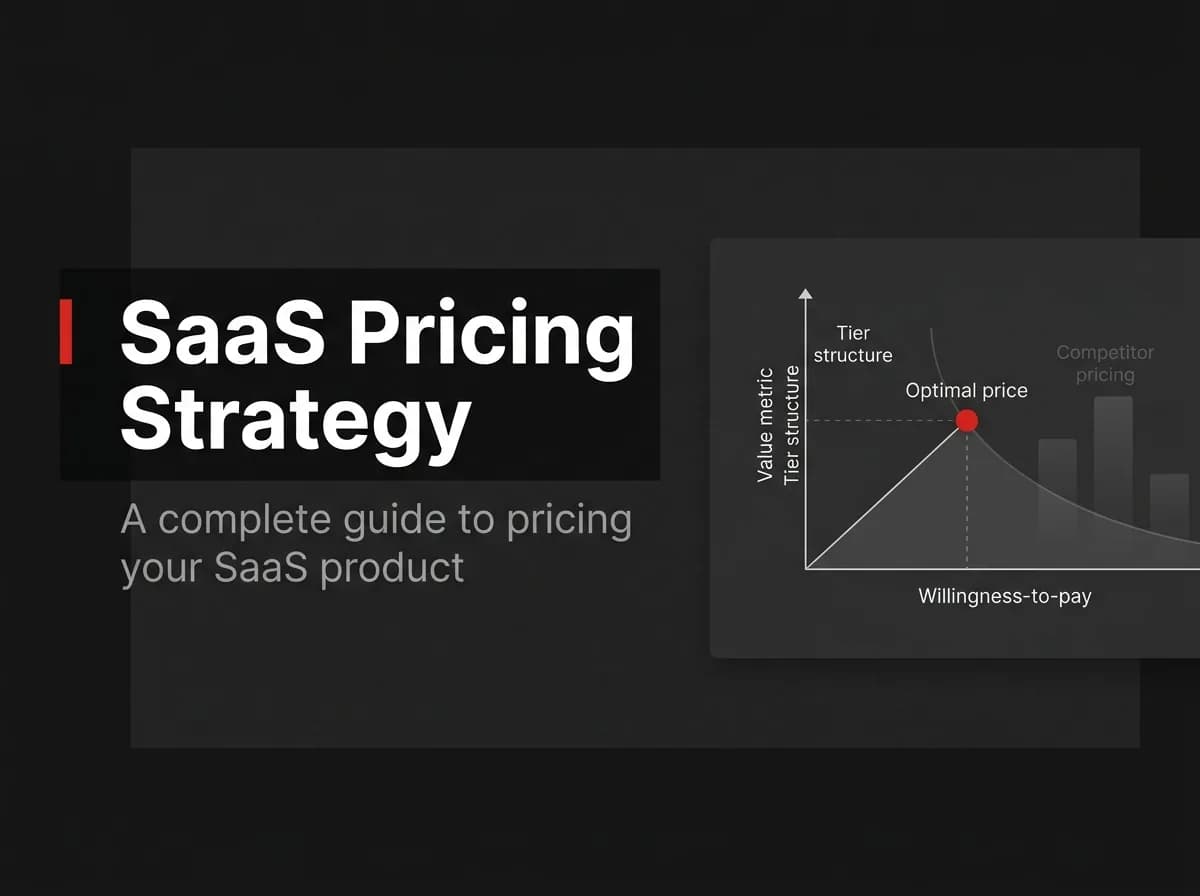
SaaS pricing is one of the highest-leverage decisions you will make — and most founders get it wrong in the same direction: too cheap, too confusing, and then never touched again. Good pricing starts from the value you deliver, not your hosting costs. Here's the complete strategy guide for getting it right and keeping it right.
Quick Answer
Good SaaS pricing starts from the value you deliver and the way your customers grow, not from your costs. Pick a value metric (the thing customers pay more for as they get more value), set a small number of clear tiers around it, and revisit pricing as you learn. The biggest mistakes are underpricing, too many confusing tiers, and never changing price again. Treat pricing as an ongoing experiment, not a one-time decision.
The steps to a pricing strategy
Find your value metric. What grows with the value a customer gets — seats, usage, projects, contacts? Price along that axis.
Segment your buyers. Hobbyist, team, and enterprise want different things; tiers map to segments.
Set 3-4 tiers. A free or cheap entry, a core plan, and a higher plan; optionally a custom/enterprise tier.
Anchor and contrast. Make the plan you want most to sell the obvious best value.
Price for expansion. Land at a fair entry price and grow revenue as usage grows.
Review quarterly. Use real conversion and churn data to adjust.
Value-based beats cost-based
Cost-plus pricing leaves money on the table because software costs little to copy. Value-based pricing asks "what is this worth to the customer?" and prices accordingly. Competitor-based pricing is a sanity check, not a strategy.
Common pricing mistakes
Underpricing because you fear losing deals — it signals low value and starves growth.
Too many tiers that paralyze buyers; aim for 3-4.
No value metric, so heavy users pay the same as light users.
Never iterating — your first price is a guess.
How this maps to FastStaq
FastStaq gives you the mechanics to execute whatever pricing strategy you choose: a Plan model, Subscription and BillingInterval for monthly/yearly tiers, and a usage/credits module (CreditBalance, CreditTransaction) for usage-based metrics when you need them. Because billing runs on Stripe (or Lemon Squeezy), changing prices and plans is configuration, not a rebuild. FastStaq itself ships as a one-time lifetime package, but the boilerplate supports recurring plans for the SaaS you build with it. See the SaaS billing guide and pricing models explained.
Frequently asked questions
How many pricing tiers should I have? Usually three to four: an entry plan, a core plan, and a higher plan, optionally plus custom/enterprise.
Should I offer a free plan? Offer free (or a free trial) when it helps users reach value quickly and you can convert them later; skip it if it attracts non-buyers.
How often should I change pricing? Review at least quarterly and adjust as you learn from conversion and churn data.
Next steps
Design a high-converting pricing page
Back to the SaaS billing guide