SaaS Starter Kit - What to Look For Before You Buy
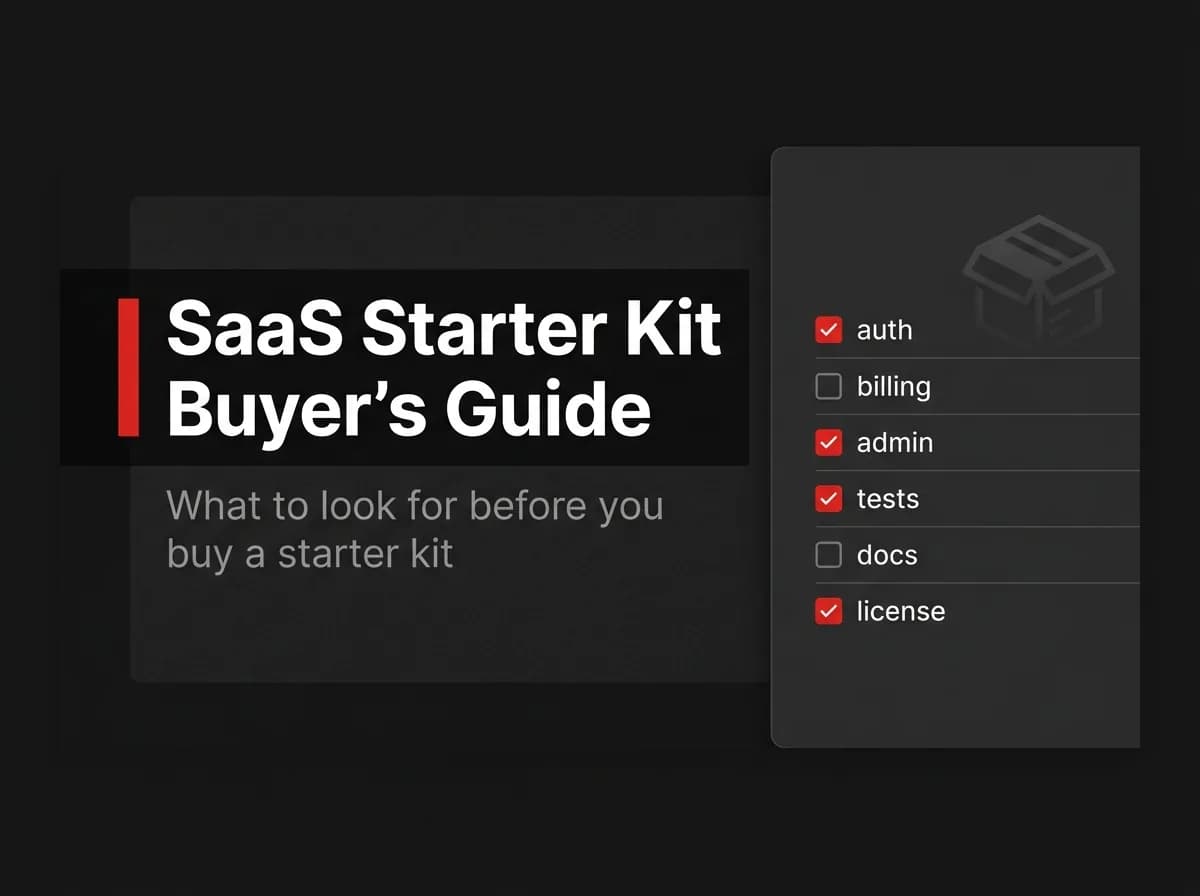
A SaaS starter kit promises to save you months of foundational work — but they are not all equal. Some are polished demos the moment you open the billing code. Others lock you into a hosted service you can never fully own. Knowing what to look for before you buy saves you from inheriting a mess instead of a head start. Here's the complete evaluation checklist.
Quick Answer
Before buying a SaaS starter kit, look for production-ready authentication and billing, a real database with migrations, code you own outright, a stack your team already knows, active maintenance, and clear docs. Avoid kits that are demos in disguise, lock you into a hosted black box, or skip the hard parts (payments, multi-tenancy). The goal is to save months of foundational work without inheriting a mess.
What a SaaS starter kit includes
A SaaS starter kit (or boilerplate) is a pre-built codebase with the common building blocks — auth, billing, a database layer, an admin area, and often content and support tools — so you start on your product instead of the plumbing.
What to look for
Criterion | What good looks like | Red flag |
|---|---|---|
Auth | Sessions/OAuth/magic link, working | A stub or "TODO" auth |
Billing | Real subscriptions + webhooks | Fake checkout, no webhooks |
Database | Postgres/MySQL + migrations | No migration workflow |
Ownership | You own and can fork the code | Hosted black box you rent |
Stack fit | A stack your team knows | An unfamiliar exotic stack |
Maintenance | Active updates, changelog | Abandoned, last update long ago |
Docs | Clear setup + architecture docs | Sparse or missing docs |
Red flags
Auth or billing that looks finished but is a demo when you open it.
A "boilerplate" that is really a hosted service you cannot fully own.
No database migrations, so schema changes are dangerous.
No multi-tenancy when you need teams/organizations.
Build vs buy math
Building auth, billing, a database layer, and an admin area yourself is commonly 200-400+ hours before product work. A good kit collapses that to days of configuration. The trade-off is adopting its stack and conventions — which is why stack fit matters.
How to evaluate code quality
Read the code before you commit: is it typed, organized by feature, and tested? Does billing handle webhooks and idempotency? Are migrations real? A short review saves a long regret.
How this maps to FastStaq
FastStaq is a concrete example of a complete, owned starter kit: production-ready auth (sessions, OAuth, magic link, 2FA, RBAC), billing on Stripe/Lemon Squeezy with webhook dedup, PostgreSQL via Prisma with migrations, multi-tenant workspaces, and an admin area — plus blog, knowledge base, and support modules. It is sold as a $299 one-time lifetime package, and buyers own the code via a license and GitHub access. See what a SaaS boilerplate is and best SaaS templates.
Frequently asked questions
What should a SaaS starter kit include? At minimum production-ready auth and billing, a real database with migrations, and an admin area — with code you own.
What is the biggest red flag? Auth or billing that turns out to be a demo, or a "kit" that is really a hosted service you cannot own.
Is buying a starter kit worth it? If it saves months of foundational work and you own the code, yes — just verify the hard parts are real.
Next steps
Compare best SaaS templates
See the best Next.js boilerplates
Compare Supastarter vs Makerkit vs FastStaq and the best Makerkit alternative