SaaS Churn - How to Measure and Reduce It
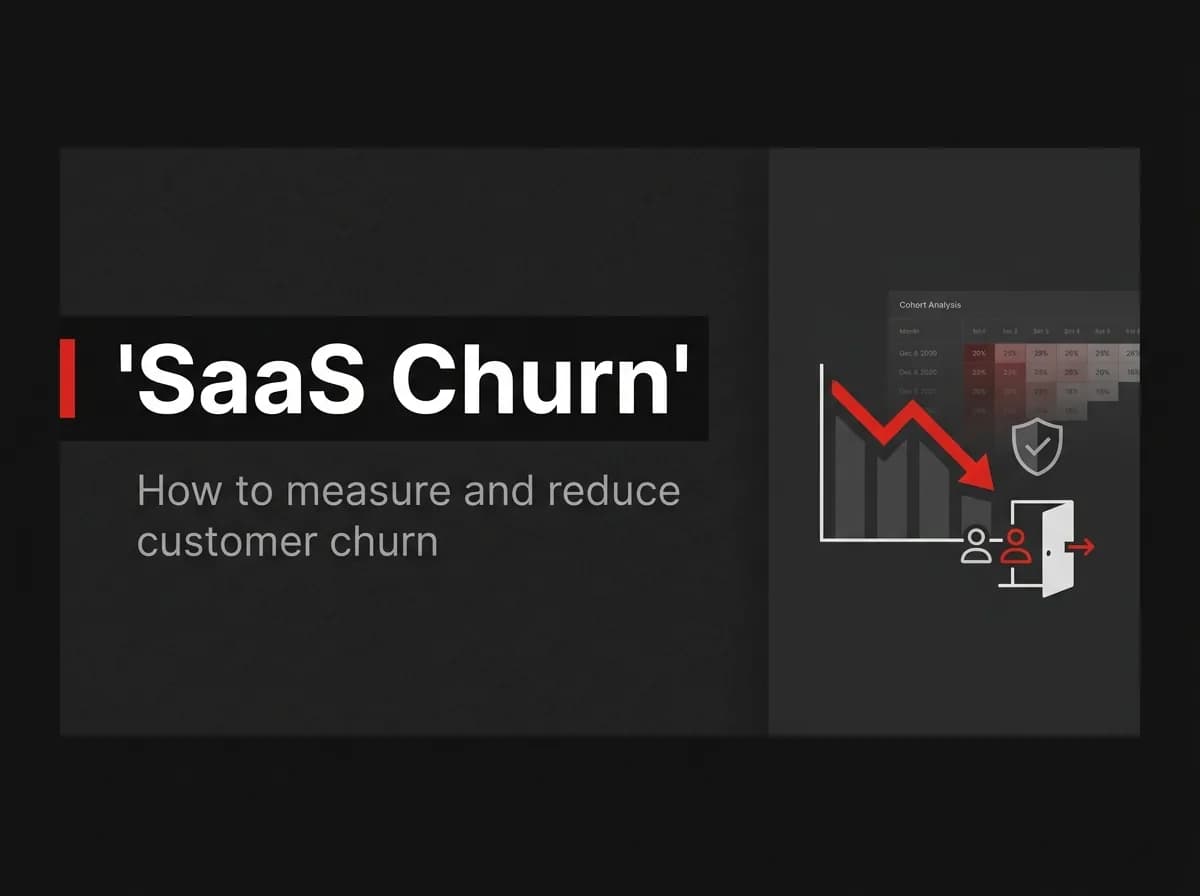
SaaS churn is the metric that quietly kills businesses that look healthy on the surface. You can be adding customers every month and still be bleeding out if churn is high enough. Understanding how to measure it correctly — and which levers actually move it — is one of the most valuable things you can do for long-term growth. Here's how it works and what to do about it.
Quick Answer
Churn is the rate at which customers (or revenue) leave over a period. Measure customer churn as customers lost divided by customers at the start of the period, and revenue churn as recurring revenue lost over starting recurring revenue. Reduce churn by getting users to value fast (onboarding), fixing failed-payment (involuntary) churn, and watching for disengagement before customers cancel. Because SaaS revenue recurs, small churn reductions compound into large long-term gains.
How to measure churn
Customer churn rate = customers lost in period / customers at start of period
Revenue churn rate  = MRR lost in period / MRR at start of period
Track both: you can lose few customers but a lot of revenue (or vice versa). Net revenue retention (NRR) folds in expansion, so it can exceed 100% even with some churn.
Voluntary vs involuntary churn
Type | Cause | Fix |
|---|---|---|
Voluntary | Customer chooses to cancel | Better onboarding, value, support |
Involuntary | Failed/expired payments | Dunning, retries, card-update prompts |
Involuntary churn is often a large, fixable share of total churn — solved by retrying failed payments and prompting customers to update cards.
How to reduce churn
Nail onboarding so users reach value quickly.
Fix involuntary churn with dunning and payment retries.
Watch engagement signals and reach out before renewal for at-risk accounts.
Make canceling informative — capture reasons to fix root causes.
Grow expansion (upsell/seats) so NRR stays healthy.
How this maps to FastStaq
FastStaq's billing layer helps on the involuntary-churn side: Stripe (or Lemon Squeezy) handles renewals and failed-payment retries, the customer portal lets users update payment methods, and webhook events let your app react to failures and cancellations. Combined with its notifications and support modules, you can catch at-risk accounts before they lapse. See the SaaS business model and the billing guide.
Frequently asked questions
What is a good churn rate? It varies by segment, but lower is always better; reducing churn compounds because revenue recurs.
What is the difference between customer and revenue churn? Customer churn counts lost accounts; revenue churn counts lost recurring revenue — track both.
How do I reduce involuntary churn? Use dunning (automatic retries) and prompt customers to update expired or failed payment methods.