The SaaS Business Model Explained
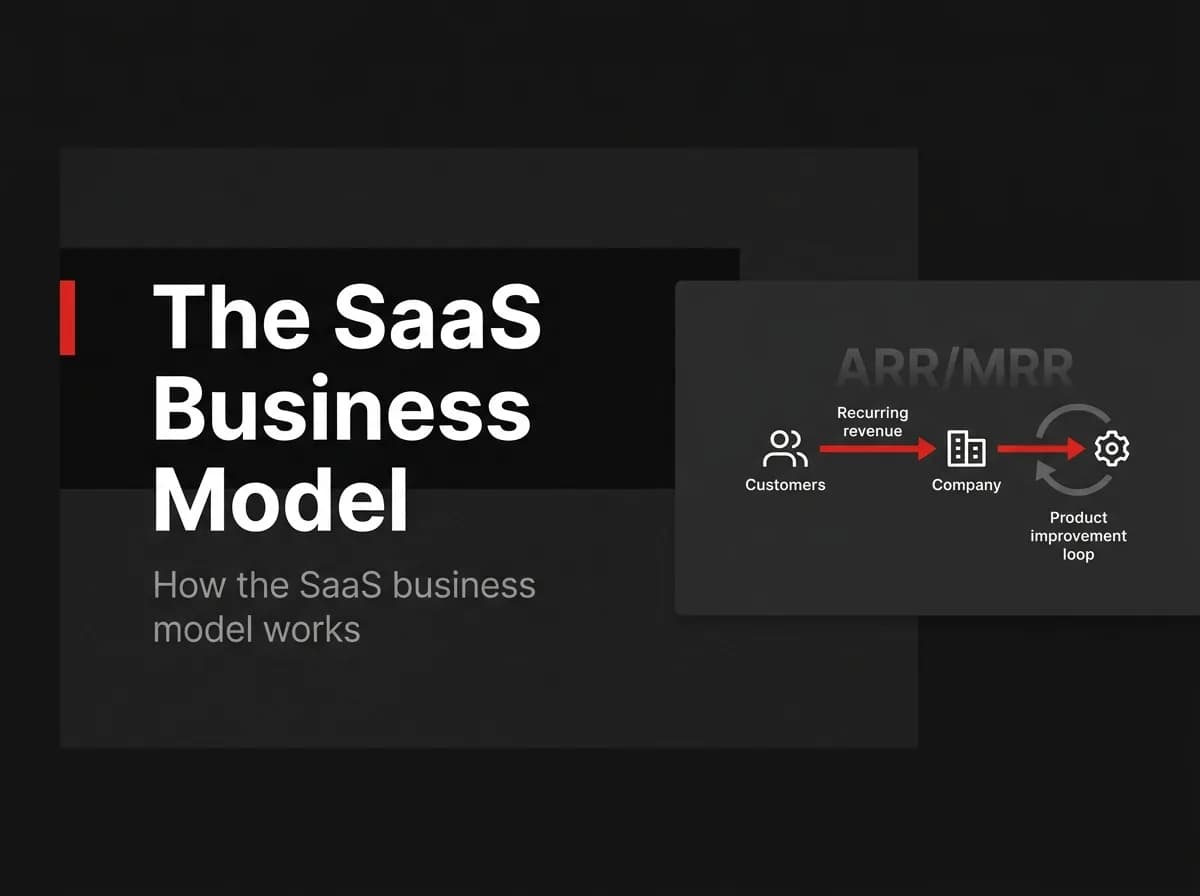
The SaaS business model is deceptively simple: sell software as an ongoing subscription instead of a one-time license. The reason it works so well is that revenue recurs — one acquired customer pays you monthly or yearly for as long as they stay. The reason it fails is the same: churn silently erodes the base faster than new customers can fill it. Here's how the model actually works and what drives the economics.
Quick Answer
The SaaS business model sells software as an ongoing subscription instead of a one-time license. Customers pay monthly or yearly for hosted software the vendor maintains, which creates predictable recurring revenue that compounds as you add customers and reduce churn. Its economics live and die on three numbers: how much it costs to acquire a customer (CAC), how much that customer is worth over time (LTV), and how fast customers leave (churn).
Definition
Software-as-a-service (SaaS) delivers software over the internet on a subscription. The vendor hosts and updates the app; customers rent access rather than buying a perpetual license. Revenue recurs, so retention matters as much as acquisition.
Why the model works
Lever | Effect |
|---|---|
Recurring revenue | Predictable MRR/ARR you can forecast and reinvest |
Low marginal cost | Serving one more customer costs little |
Expansion revenue | Upgrades and seats grow accounts over time |
Compounding | Low churn + steady acquisition compounds growth |
The core economics
CAC: total sales + marketing cost to win a customer.
LTV: revenue a customer generates over their lifetime; healthy SaaS targets LTV well above CAC.
Churn: the rate customers cancel; even small churn caps long-term growth.
Payback period: how long until a customer's revenue covers their CAC.
Common monetization approaches
Subscriptions (tiered or per-seat), usage-based pricing, freemium with paid upgrades, and one-time/lifetime deals all fit under the SaaS umbrella. Most products combine a recurring base with expansion levers.
How this maps to FastStaq
FastStaq gives you the monetization machinery to run this model: Plan and Subscription with monthly/yearly BillingInterval, Stripe (or Lemon Squeezy) for payments and the customer portal, a usage/credits module for metered pricing, and a built-in affiliate program to drive acquisition. FastStaq itself is sold as a one-time lifetime package, but the boilerplate supports recurring SaaS billing for the product you build with it. See SaaS pricing models and SaaS churn.
Frequently asked questions
What is the SaaS business model in simple terms? Renting hosted software on a recurring subscription instead of selling a one-time license.
Why is churn so important? Recurring revenue compounds only if customers stay; churn directly caps growth and LTV.
What metrics define SaaS health? MRR/ARR, churn, CAC, LTV, and payback period.